In 2026, when digital distractions are ever-present, gathering and sustaining a child's attention on a single point has become one of the hardest tasks. Research shows children spend an average of 7.5 hours a day on digital media. Yet neuroscience lets us say, instead of "attention spans are shrinking," that "attention is being reshaped within the digital ecosystem."
1. Understanding Attention Capacity: Realistic Expectations
Sustainable focus durations by age group:
⢠Ages 4-5: 8-12 minutes (the prefrontal cortex is still at an early stage)
⢠Ages 6-7: 12-18 minutes (attention becomes more controllable but stays open to external stimuli)
⢠Age 8 and up: 20-30+ minutes (deep focus begins to develop)
A child's brain is programmed to explore its environment; this is sometimes mistaken for a lack of focus, when it is in fact a natural dynamism.
2. Digital Distraction and Rewiring of the Brain
Social media and some games are built on "fast rewards" (dopamine). The brains of overexposed children struggle to focus during patience-demanding activities and constantly seek stimulation.
3. Focus Strategies in the Light of 2026 Science
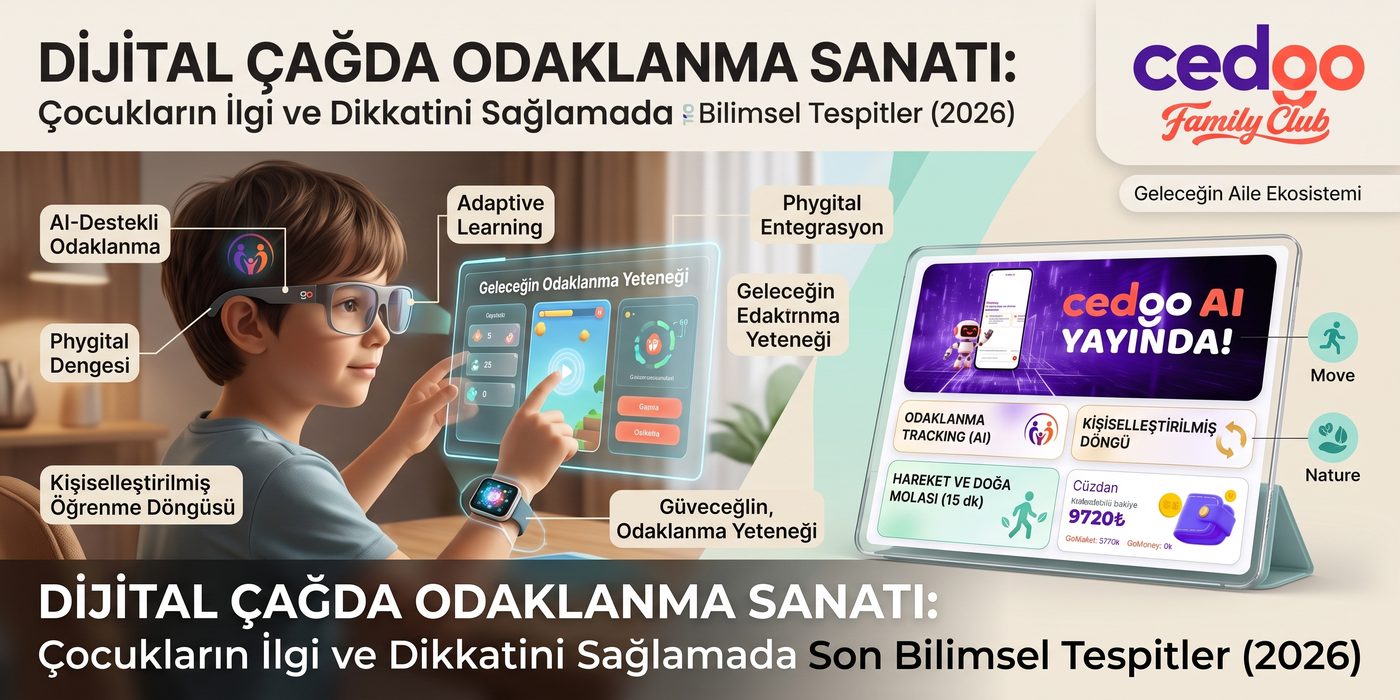
A. Phygital Balance: Combine physical activity with digital learning. A short motor exercise every 15 minutes increases blood flow to the prefrontal cortex and refreshes attention.
B. Dopamine Detox with Off-Screen Activity: Nature-focused activities (gardening, forest walks) rest the attention mechanisms (Attention Restoration Theory).
C. AI-Assisted Personalized Focus: Adaptive systems sense when a child is bored and adjust the stimulation level, creating a sustainable cycle.
Frequently Asked Questions
⢠Are attention spans shrinking? No; they are being fragmented and redirected.
⢠Should we restrict screens entirely? No; what matters is content quality and off-screen balance ("screen-smart" parenting), not duration.
⢠Is boredom bad? No; "constructive boredom" sparks creativity and intrinsic motivation.
Conclusion
Focus is the most prestigious skill of the digital age. The strongest strategy is to integrate AI-assisted personalized learning, contact with nature and physical movement into the focus cycle.
The Art of Focus in the Digital Age: The Latest Science on Children's Attention (2026)
Focus durations by age, the dopamine loop and phygital strategies in light of neuroscience.